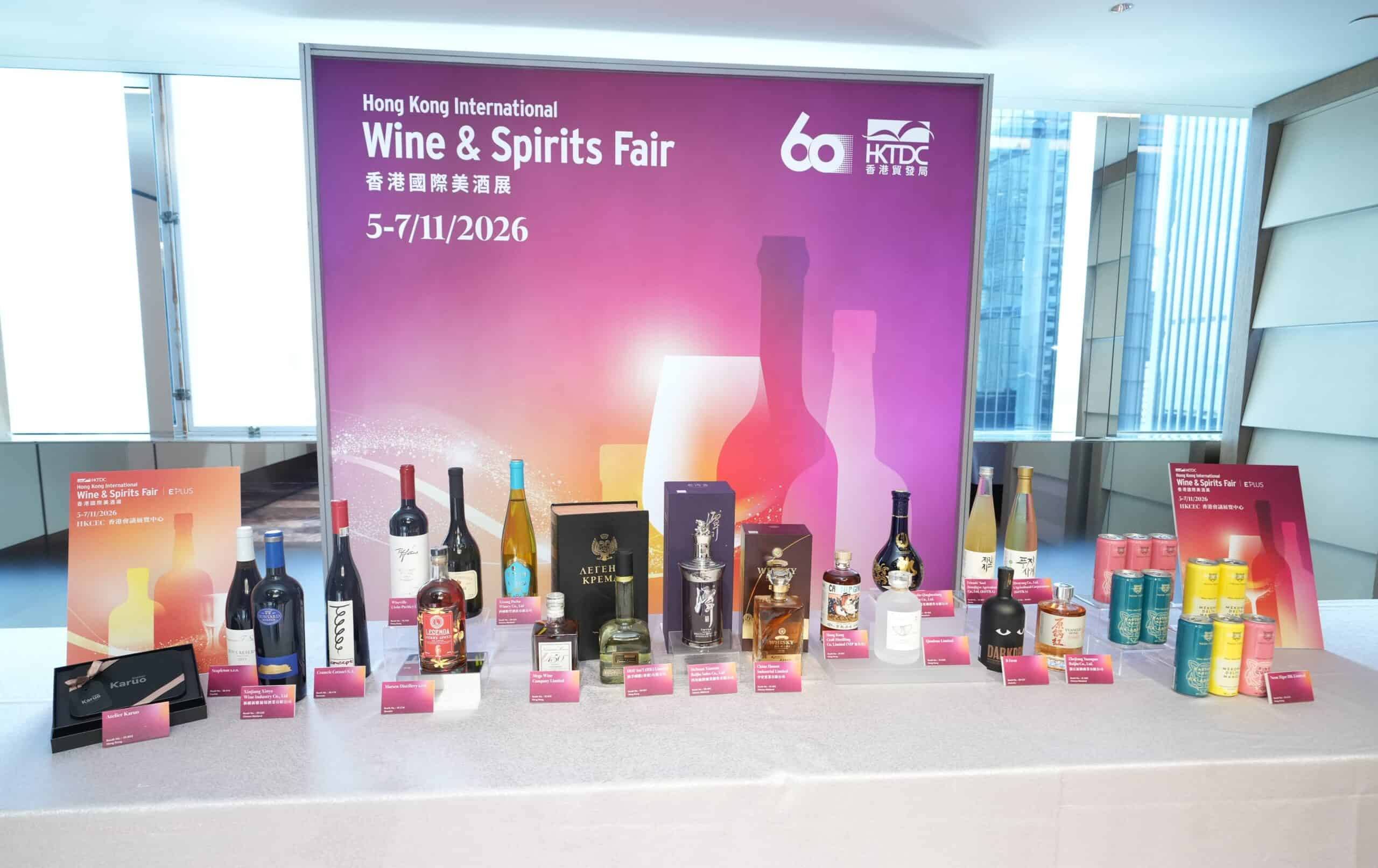

Hong Kong’s two major lighting trade shows have opened with approximately 3,000 exhibitors from more than 20 countries and regions, presenting smart-lighting systems, LED displays, architectural lighting and energy-efficient outdoor solutions.
The Hong Kong International Lighting Fair (Autumn Edition) 2026 runs from 27 to 30 October at the Hong Kong Convention and Exhibition Centre. The Hong Kong International Outdoor and Tech Light Expo 2026 is being held from 26 to 29 October at AsiaWorld-Expo.
Organised by the Hong Kong Trade Development Council, the two exhibitions are operating under the theme “Beyond Illumination.” The programme focuses on smart connectivity, human-centric lighting, immersive visual environments and sustainability.
Hong Kong lighting fairs 2026 at a glance
| Exhibition | Dates | Venue | Main focus |
|---|---|---|---|
| Hong Kong International Lighting Fair (Autumn Edition) | 27–30 October 2026 | Hong Kong Convention and Exhibition Centre | Commercial, residential, connected and decorative lighting, LED displays and components |
| Hong Kong International Outdoor and Tech Light Expo | 26–29 October 2026 | AsiaWorld-Expo | Outdoor, industrial, architectural and smart-city lighting |
| Click2Match online meetings | 19 October–6 November 2026 | Online | Buyer-exhibitor business matching |
The organiser says the combined exhibitions feature around 3,000 companies, brands and suppliers. Buyers should consult the separate Autumn Lighting Fair and Outdoor and Tech Light Expo websites because the events are held at different venues.
Connected lighting moves beyond individual products
The Hall of Connected Lighting at the Autumn Lighting Fair features approximately 70 brands offering controls, sensors, luminaires and integrated smart-building systems.
Participants include Casambi from Finland, Signify from the Netherlands, Viso Systems from Denmark, and Chinese mainland companies Inventronics and TUYA.
Industry organisations represented at the fairs include:
- Connectivity Standards Alliance
- DALI Alliance
- SILA-EMN Alliance
- Zhaga Consortium
- KNX
- Illuminating Engineering Society
The participation of these organisations is commercially relevant because connected lighting increasingly depends on interoperability between luminaires, controls, sensors, gateways and building-management platforms.
Buyers should determine whether a product works only within one manufacturer’s ecosystem or supports widely used standards. Proprietary systems may offer advanced functionality but can make later expansion, maintenance or supplier replacement more difficult.
Important questions include:
- Which communication protocols does the system support?
- Can it connect with existing building-management software?
- Is cloud access required?
- Where is operational data stored?
- Will the product continue working if the internet connection fails?
- Can components from different suppliers operate together?
- How long will software updates and security support remain available?
New LED Display Solution Zone broadens the fair
One of the most significant additions in 2026 is the LED Display Solution Zone at the Autumn Lighting Fair.
The zone extends the exhibition beyond conventional illumination into commercial display and integrated visual systems. Products include:
- High-resolution LED screens
- Commercial video walls
- Transparent LED displays
- Flexible LED panels
- Immersive visual systems
- Conference and collaboration displays
- Integrated audio-visual solutions
Potential applications range from retail stores and corporate meeting rooms to exhibitions, entertainment venues, virtual production and architectural projects.
Ledman Hong Kong is presenting its LEDHUB Smart Conference Solution, which combines a large-format screen, video conferencing and collaboration functions. The company is also displaying its QS Series IceScreen, previously used at the Milano Cortina 2026 Winter Olympic Games, according to the organiser.
For buyers, display resolution is only one part of the procurement decision. Other considerations include viewing distance, brightness, refresh rate, heat management, installation structure, maintenance access and compatibility with content-management systems.
International buyers should also confirm the applicable electrical, radio-frequency and fire-safety certifications before ordering products for their home markets.
Hall of Aurora brings together around 500 lighting brands
The Hall of Aurora features approximately 500 brands covering architectural, commercial and decorative lighting.
Participating companies include manufacturers whose products have been used in museums, stadiums, hotels and internationally recognised architectural projects. The organiser highlights products associated with locations such as the Museum of the Future in Dubai, Casa Batlló in Barcelona and the Eiffel Tower in Paris.
These project references can help buyers identify suppliers with experience in demanding installations. They should not replace independent verification.
Project buyers should ask exhibitors to provide:
- Details of the supplier’s actual role in the referenced project
- Photometric data and testing reports
- Product certification
- Warranty conditions
- Completed-project contacts where available
- Manufacturing and delivery capacity
- Replacement-component availability
- Installation and commissioning support
The distinction between a direct project supplier, component provider and subcontractor is important when evaluating references.
Human-centric lighting receives greater attention
Several exhibits address the relationship between artificial light, comfort and the daily rhythms of building users.
Signify is presenting Philips Skylight, a system designed to simulate aspects of natural light and adjust lighting conditions during the day. Other exhibitors are displaying controls for adapting brightness and colour temperature according to room use, time or user preferences.
These systems may be relevant to offices, hospitals, schools, hotels, care facilities and residential developments. However, buyers should distinguish measurable lighting performance from broader health and well-being claims.
Useful evaluation criteria include:
- Illuminance and uniformity
- Colour-rendering performance
- Flicker measurements
- Glare ratings
- Dimming range
- Colour-temperature control
- Compatibility with sensors and automation systems
- Independent testing of claimed benefits
A well-designed adaptive lighting system may improve visual comfort and operating efficiency, but results will depend on the installation, control strategy and needs of the people using the space.
Outdoor fair combines lighting with solar power and storage
The Hong Kong International Outdoor and Tech Light Expo is organised into three principal zones:
- Smart Pole and Solution
- Outdoor, Industrial and Technical Lighting
- Landscape and Architectural Lighting
The 2026 edition also includes photovoltaic and energy-storage products intended for street lighting, emergency power, off-grid sites and other outdoor applications.
Exhibits include solar-powered pathway lights, portable storage systems, industrial luminaires and high-mast stadium lighting.
Combining solar generation, storage and lighting can reduce dependence on grid connections in suitable locations. Buyers must nevertheless assess products against local conditions rather than relying only on laboratory specifications.
Relevant factors include:
- Local solar irradiation
- Battery chemistry and expected cycle life
- Operating temperature range
- Wind and structural resistance
- Ingress-protection rating
- Lighting autonomy during poor weather
- Battery replacement cost
- Remote-monitoring capability
- Availability of local maintenance
Claims relating to energy savings, operating life or weather resistance should be supported by testing documentation and clearly defined operating conditions.
Finnish companies present connected and outdoor lighting technologies
The fairs include several exhibitors from Finland, reflecting the country’s established expertise in lighting controls, optics and architectural illumination.
Casambi is demonstrating its wireless lighting-control ecosystem through an application-based café installation. Lival is participating in the Hall of Aurora, while LEDiL is presenting its STRADA reflector for outdoor lighting.
According to the organiser, the LEDiL product offers controlled light distribution, low glare and optical efficiency of approximately 90% when used with protective glass. Buyers should request the relevant photometric files and testing conditions when comparing the product with alternative optical components.
The Finnish presence may be particularly relevant to companies looking for European lighting-control technologies alongside the large selection of Asian luminaires and components.
Forums examine standards, circularity and smart cities
The supporting programme brings together lighting designers, technology associations and industry experts.
Topics include:
- Connected-lighting systems
- Smart-city lighting
- Human-centric and adaptive illumination
- Emotional well-being and lighting design
- Circular design and material reuse
- Award-winning architectural lighting
- AI applications in outdoor lighting
The Connected Lighting Forum examines intelligent and human-centric lighting, while a session organised with Women in Lighting focuses on circularity in lighting design.
At AsiaWorld-Expo, the Smart Tech Integration in Outdoor Lighting session addresses the use of AI-connected infrastructure in smart cities.
For buyers, these sessions can provide useful context on emerging standards and design approaches. They are most valuable when combined with technical discussions with suppliers and independent examination of product documentation.
Combine the lighting fairs with Eco Expo Asia 2026
The Outdoor and Tech Light Expo is being held alongside Eco Expo Asia 2026 at AsiaWorld-Expo from 26 to 29 October.
Eco Expo Asia adds environmental monitoring, green buildings, electric mobility, renewable energy and waste-management technologies to the sourcing programme. This creates useful crossover opportunities for municipal authorities, infrastructure developers, property companies and smart-city project teams.
ChinaExpoHub’s Eco Expo Asia 2026 report provides more information about its exhibitors, ASEAN Pavilion and green-technology programme.
Free shuttle buses operate between AsiaWorld-Expo and the Hong Kong Convention and Exhibition Centre from 26 to 29 October. Visitors should allow sufficient travel time when arranging meetings at both venues.
ChinaExpoHub’s earlier overview of the Hong Kong tech fairs also covers the wider October sourcing programme.
Who should visit the twin lighting fairs?
The exhibitions are particularly relevant to:
- Lighting importers and distributors
- Architects and lighting designers
- Property developers
- Electrical contractors
- Building-services engineers
- Smart-building integrators
- Municipal and infrastructure buyers
- Retail and hospitality groups
- AV and commercial-display integrators
- Industrial facility operators
- OEM and private-label buyers
- Product certification and testing companies
Buyers sourcing finished products should confirm certification, warranty coverage and local support. Companies sourcing components or private-label products should also examine factory capacity, quality-control procedures, tooling ownership and intellectual-property arrangements.
How buyers should prepare
With thousands of exhibitors across two venues, attempting to explore every hall is unlikely to be productive.
Before visiting, buyers should:
- Define the intended application and required specifications.
- Search the official exhibitor directories and shortlist suppliers.
- Arrange priority meetings in advance.
- Separate meetings by venue and exhibition day.
- Prepare questions about standards, certifications and interoperability.
- Request photometric files and technical documentation.
- Compare warranties, component availability and after-sales support.
- Record booth numbers and supplier contacts independently.
- Use Click2Match for companies that cannot be met onsite.
- Plan follow-up testing before placing significant orders.
The fairs offer a broad view of how lighting is becoming integrated with building controls, displays, sensors, renewable energy and urban infrastructure. Their greatest commercial value will come from comparing complete systems and supplier capabilities rather than assessing luminaires only by appearance or unit price.
The Hong Kong International Lighting Fair (Autumn Edition) 2026 continues through 30 October at HKCEC, while the Hong Kong International Outdoor and Tech Light Expo 2026 runs through 29 October at AsiaWorld-Expo.
More upcoming sourcing events can be found in the China trade show calendar.