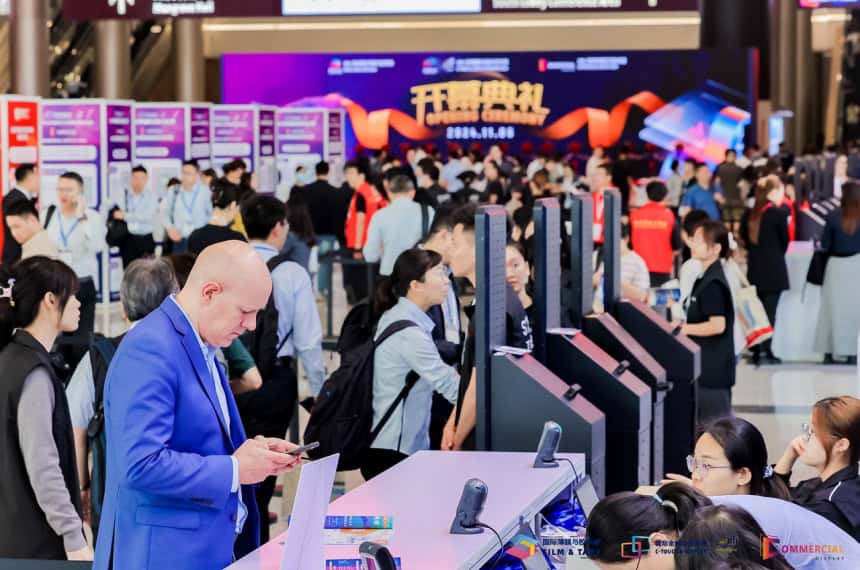

The Hong Kong Electronics Fair 2026 (Autumn Edition) and electronicAsia 2026 attracted more than 61,000 buyers from 141 countries and regions, as artificial intelligence, robotics and smart wellness technologies dominated sourcing interest.
The four-day exhibitions concluded on October 16 at the Hong Kong Convention and Exhibition Centre. Together, they brought more than 3,200 exhibitors from 15 countries and regions into a combined marketplace covering consumer electronics, electronic components, manufacturing technology and emerging AI applications.
According to the Hong Kong Trade Development Council, buyers outside Hong Kong came principally from the Chinese Mainland, India, Japan and the United States. Attendance from Kazakhstan and Brazil also recorded growth.
International buying missions target electronics suppliers
The HKTDC organised 130 buying missions involving companies from 65 countries and regions.
Participating buyers included Samsung Electronics and SSG.com from Korea, Mercado Libre from Argentina, Reichelt Elektronik from Germany, Taç Elektronik from Türkiye and Pixel Electric from Kenya.
The international attendance gave exhibitors access to retailers, distributors, electronics manufacturers, technology integrators and sourcing companies from both established and emerging markets.
Several buyers reported concrete purchasing activity during the exhibition. Brazilian electronics distributor Hayamax said it finalised a US$200,000 order with an existing business partner and expected to develop approximately four additional supplier relationships.
Kenyan robotics and intelligent-systems supplier Pixel Electric identified manufacturers from the Chinese Mainland and said it planned to purchase approximately US$100,000 of smart-metering and automation products.
These individual examples should not be interpreted as representative of every exhibitor’s results, but they indicate that buyers were using the fairs for active supplier evaluation rather than general market observation alone.
RoboPark presents more than 120 robots
AI and robotics were among the strongest themes at the 2026 exhibitions.
RoboPark presented more than 120 robots across commercial services, industrial operations, logistics, entertainment, healthcare and rehabilitation.
Five interactive areas allowed buyers to examine practical applications and watch demonstrations. Participating Chinese robotics companies included UBTECH, AgiBot and DEEP Robotics.
Products shown at RoboPark included humanoid robots, robotic hands, educational robots and systems designed for industrial or service environments.
Beijing Linkerbot Technology introduced its Linker Hand O30 direct-drive dexterous robotic hand in Hong Kong. The company positioned the product for humanoid robotics and industrial applications requiring precise and responsive movement.
The concentration of robotics suppliers in one area made it easier for buyers to compare products, evaluate possible applications and discuss integration requirements.
Companies sourcing robots should nevertheless examine more than demonstration performance. Important questions include reliability, payload, battery life, safety certification, software compatibility, maintenance arrangements and the availability of technical support in the buyer’s home market.
Future Industries Zone brings together over 100 companies
A new Future Industries Zone brought together more than 100 companies across five themes:
- Future Computing
- Future Manufacturing
- Future Marine and Quantum Technologies
- Future Microelectronics
- Future Wellness
The zone was intended to connect technology developers with corporate customers, investors and international business partners.
Hong Kong-based Xeroptix Technology presented integrated embodied-AI solutions covering algorithms, software, hardware and chip design. The company reported discussions with more than 50 potential customers from Australia, Africa, Europe and the Middle East.
Xeroptix estimated that those discussions could generate more than US$1 million in potential orders. This was a company projection at the conclusion of the exhibition rather than confirmed sales.
The fairs also hosted more than 120 start-ups, principally through the Startup Zone. Investment Matchmaking sessions connected emerging companies with corporate investors and venture-capital representatives.
Hong Kong news-verification technology company Fliq said it met approximately 30 prospective investors and partners and secured two strategic cooperation opportunities. Korea’s Posco Investment reported follow-up discussions with a start-up developing smart audio glasses for runners.
Smart wellness attracts more than 130 exhibitors
More than 130 exhibitors participated in the Smart Wellness section, reflecting the growing overlap between consumer electronics and personal health technology.
Products covered:
- Digital health devices
- Smart wearables
- Personal-care technology
- Gerontechnology
- Rehabilitation equipment
- Consumer electronics for healthy living
The sector creates opportunities for consumer-electronics retailers, healthcare distributors, senior-care providers and technology companies developing connected health products.
However, buyers should distinguish general wellness devices from regulated medical products. Suppliers should be asked about the intended use of each product, applicable certifications, data protection, testing procedures and whether medical-device approval is required in the target market.
electronicAsia covers components and manufacturing technology
While the Autumn Electronics Fair focused largely on finished products and emerging applications, electronicAsia 2026 covered the upstream electronics supply chain.
The event featured:
- Electronic components and assemblies
- Printed circuit boards
- Display technologies
- Electronic manufacturing services
- Testing and measurement equipment
- Production technologies
- Solar and photovoltaic components
The official electronicAsia overview confirms that the exhibition ran alongside the Autumn Electronics Fair from October 13–16 at the Hong Kong Convention and Exhibition Centre.
The co-located arrangement allowed product developers to investigate finished products, components and manufacturing partners during the same visit.
For buyers working on new electronic products, this can shorten the process of moving from product concept to component selection, prototyping and production. Supplier evaluation should still include factory capacity, quality-control systems, component traceability and intellectual-property protection.
Industry survey identifies AI as a major growth driver
An independent agency commissioned by the organisers interviewed more than 1,150 buyers and exhibitors during the fairs.
The survey found that 96% of respondents expected their sales to increase or remain stable during the next 12 to 24 months.
Respondents were most positive about sales prospects in:
- ASEAN: 83%
- Middle East: 83%
- Chinese Mainland: 81%
Artificial intelligence was also a significant theme. Approximately 74% of surveyed companies said they were already applying or planned to apply generative AI.
Frequently identified applications included:
- Product design and development
- Data analysis and reporting
- Sales and customer engagement
- Marketing and content production
Nearly 60% of respondents expected AI to have the greatest technological impact on the electronics industry during the following two years.
Because the survey covered exhibition participants rather than the entire global electronics industry, its findings should be treated as an indication of sentiment among attending companies rather than a universal market forecast.
GoGlobal Connect supports overseas expansion
The exhibitions also included a GoGlobal Connect Zone supporting Chinese Mainland companies seeking to enter international markets.
Professional service providers offered information covering financing, intellectual property, logistics, regulatory compliance and risk management.
This reflects an expanding role for Hong Kong electronics exhibitions. They are not only product-sourcing events but also platforms where manufacturers can find professional services, distribution partners and international-market expertise.
Huahon Data Technology, which develops liquid-cooled AI computing systems, used the fair to meet potential partners from Asia, Europe and the Middle East. The company said it planned to establish a Hong Kong entity and use the city as a base for international development.
For overseas buyers, the presence of export-oriented manufacturers may improve access to suppliers that already understand international documentation, certification and delivery requirements. Buyers should still verify these capabilities independently before placing orders.
Product debuts test international demand
Several exhibitors used the fairs to introduce products and test demand among international buyers.
Shenzhen-based VIGX Technology presented a pocket-sized AI-powered exoskeleton. The company reported nearly 1,000 visitors during the first two exhibition days and interest from buyers in Europe, North America and South America.
VIGX said positive market testing could lead to orders worth approximately RMB 1 million. As with other exhibitor estimates, this represents potential future business rather than completed orders.
Trade fairs can provide valuable early feedback for new products, but buyers should determine whether a displayed product is a prototype or production-ready model. Pricing, certification, manufacturing capacity and delivery schedules may not yet be finalised for newly launched technologies.
Online business matching continues until October 23
The two exhibitions used the HKTDC’s EXHIBITION+ hybrid format, combining the physical events with online sourcing and business matching.
The Click2Match platform remains available until October 23, 2026, allowing exhibitors and buyers to continue meetings after the physical fairs.
The Autumn Electronics Fair event overview provides the official exhibition dates and information about the hybrid format.
Buyers following up with suppliers should request quotations, product specifications, testing documentation and company credentials. Important commercial terms should be confirmed in writing before samples or orders are paid for.
Buyers can continue their October sourcing trip
International electronics buyers remaining in Hong Kong can continue sourcing at Global Sources Hong Kong Shows Phase 2 2026, held from October 18–21 at AsiaWorld-Expo.
The event covers mobile electronics, AI-integrated products, smart home technology, wearable devices, security products and lifestyle electronics.
Buyers travelling onward to Shenzhen can also explore two related exhibitions:
- NEPCON ASIA 2026 for electronics manufacturing, semiconductor packaging, testing and factory automation
- C-TOUCH & DISPLAY SHENZHEN 2026 for displays, touch technologies, smart glasses and advanced packaging
Both Shenzhen exhibitions take place from October 27–29 at the Shenzhen World Exhibition & Convention Center.
AI expands the role of electronics trade fairs
The Hong Kong Electronics Fair 2026 and electronicAsia 2026 demonstrated how electronics sourcing is expanding beyond conventional consumer devices and components.
AI, robotics, smart wellness, microelectronics and technology commercialisation now sit alongside traditional product procurement. At the same time, buyers continue to use the exhibitions for practical supplier discovery, order discussions and distribution partnerships.
The reported attendance of more than 61,000 buyers suggests that physical trade fairs remain commercially relevant, even as online matching extends the sourcing process beyond the exhibition hall.